
Stories
Ann's Storyby William Jupe
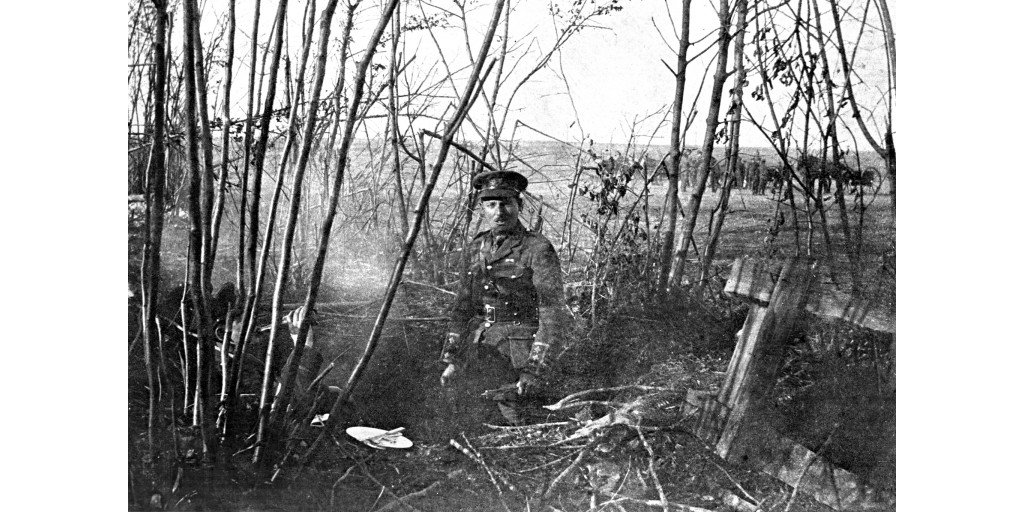
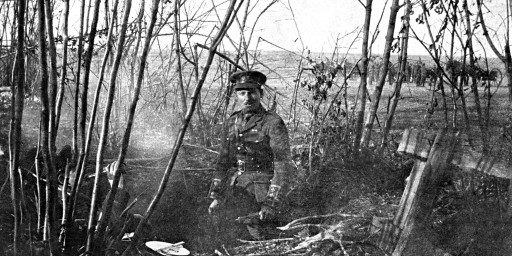
“My father looks 50 in this photograph”, Ann says. But in 1918, when she believes the picture was taken, he was only 23. He had been involved in the First World War from its beginning to the very end, and physically and mentally it had taken its toll.
At the outbreak of war in 1914, young Richard Henry Stallard was part way through completing his articles to become a solicitor. But four years later he would hold a Military Cross ‘for conspicuous gallantry and devotion to duty’, and a bar for that Military Cross, won just ten days before the Armistice. The second citation reads: ‘On the 1st November, 1918, at Maresches [France], he commanded the left support company. When the enemy counter-attacked with tanks on the left, he held on to his position until a tank was within a few yards of his headquarters, firing a machine gun at point-blank range. It was largely due to his gallant efforts that the enemy infantry in support of the tanks were repulsed. He subsequently reorganised and re-established himself on the high ground north of Maresches.’
In later years, Ann recalls her father talking of the hours and days of boredom in the trenches as much as of the episodes of action, with this photograph clearly taken during a lull. Its detail, recovered by Restoring Glory photo restoration services, is fascinating for the different stories it tells: that a soldier has a camera at the Front (quite against the rules!); that a fellow officer, though surrounded by chaos and death, still takes care to set his knife and fork together on his plate; and that only a hundred years ago, gun carriages were still drawn into battle by horses.
“My father, like almost every soldier, returned from the war with shell shock”, Ann says, “though it wasn’t properly understood as a condition. He’d trained as a solicitor, but he said, “I can’t go indoors.” So, instead he took a tenancy on a farm; and through keeping animals and being outdoors he began to get well. He had setbacks. But he was at least able to talk about his war. He was full of sayings, like: “Always see the way out”, and “Always turn your car ready for home.””
A man brave enough to look death in the face, and wise enough to take every precaution.
If you have a treasured old photograph, contact Restoring Glory today to start out on your own amazing journey.
Thursday 25th July 2019Christine’s Storyby William Jupe
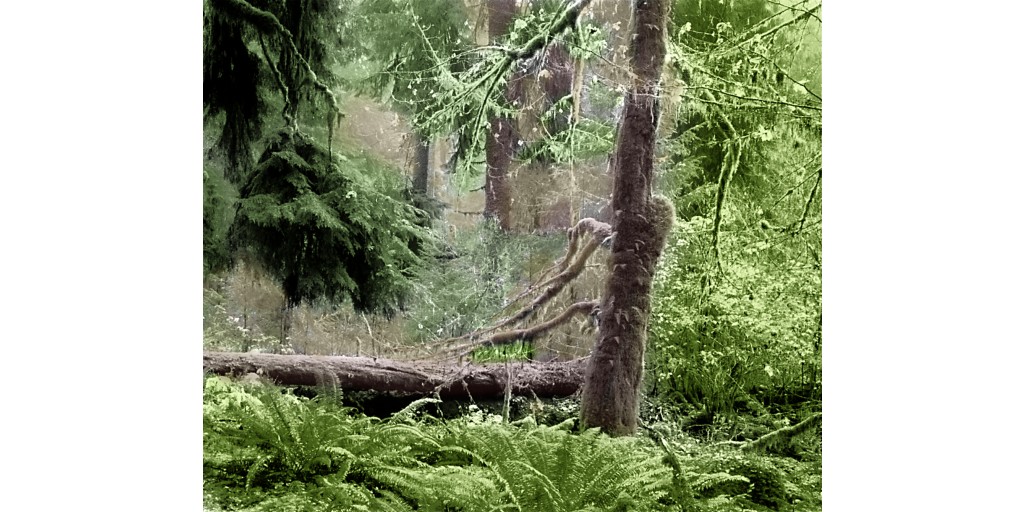
No two picture restoration projects are the same but Christine’s was unique in its own way.
Some years before, she had a received a greetings card showing a photograph of a beautiful forest scene and these words: 'Use what talent you possess: the woods would be very silent if no birds sang except those that sang best' (words attributed to Henry van Dyke, an American author and clergyman).
The card and its greeting had meant a lot to Christine: “I felt this quote was speaking directly to me”. So she framed the card and placed it where she would see it and be encouraged by its message. “But I had unfortunately displayed the picture in direct sunlight and the whole photograph had turned blue.”
Colour images are particularly vulnerable to light, with dyes fading at different speeds (see 'The story and science behind your picture'). However, all was not lost, because in situations where colours either never existed or have disappeared completely and therefore cannot be restored, it is possible to paint them in – a process known as colourising. The restorer becomes an artist, using "artists’ licence" to choose colours and tones that in their opinion best fit the scene.
Christine was delighted with what was achieved with her picture: “Your colour restoration pictures are truly wonderful! Your talents should be advertised in special magazines, like Country Life. I was babysitting on Thursday evening and have left your details with the parents; I shall be singing your praises wherever I go. You have such a talent and dedication that more people should know about you!”
And later: “The restored picture is on my piano and nowhere near the sun so all the colours are just as you made them. Thank you so much.”
If you have a treasured old photograph, contact Restoring Glory today to start out on your own amazing journey.
Thursday 25th July 2019David's Storyby William Jupe
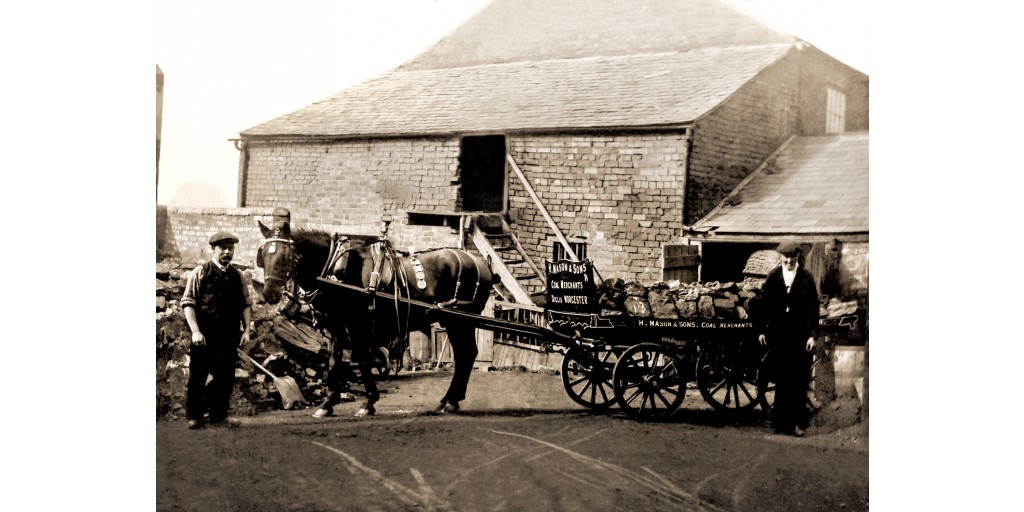
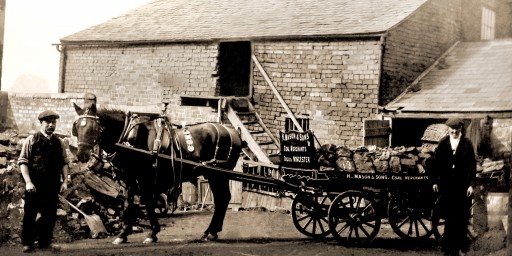
‘H Mason & Sons. Coal Merchants. Diglis, Worcester’, proclaims the sign on the horse-drawn cart. But H is not for Harry or Henry, but for Hannah, who also owned the building in the background - The Anchor Inn; still a popular local pub. In 1906, when the photograph was taken, Hannah Mason, coal merchant and licensee, was a successful businesswomen and entrepreneur in a man’s world.
More than a hundred years later, when Hannah’s great-grandson Michael moved into a new apartment just around the corner following the regeneration of the Diglis Basin, his brother David enquired about Restoring Glory’s photo restoration services. “It will be a housewarming gift”.
Viewed straight on, the picture was a ‘grey haze’ which seemed beyond repair, the best-preserved part lying beneath the Sellotaped tear down the middle. But tilted at a steep angle and away from the light, the photograph revealed its detail - which would be captured by photographing the picture at that angle. The resulting (distorted) image was then skewed back into shape on the computer; and following painstaking restoration work, printed at 60 cm by 40 cm - twice its original size.
Sadly, Michael passed away in 2016. In his memory, David and his family “held a gathering in the ‘Boathouse’ dining room at the rear of The Anchor Inn, the exact position where the old photograph was taken. We then presented the picture to The Anchor and it is on display in the restaurant, with a plaque telling the event!”
If you have a treasured old photograph, contact Restoring Glory today to start out on your own amazing journey.
Thursday 25th July 2019Elizabeth's Storyby William Jupe
“I felt sure that a member of his family would call one day”, said the owner of the house when Elizabeth knocked at the door. “Please wait a moment”.
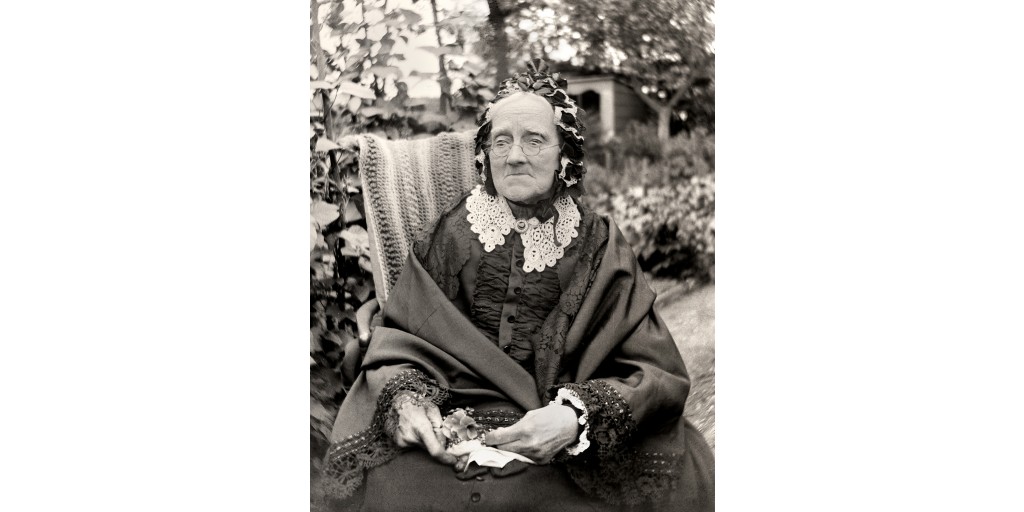
Returning, the lady held out to Elizabeth a box of more than 50 photographic glass plates, each about 10 cm square. “These are yours. We found them in the attic when we moved in and kept them for you.”
The glass plates belonged to Elizabeth’s great-grandfather John James Cam (1850-1919). “The house in question was owned by my maternal grandparents who had provided John Cam’s widow Mary with a home after he died in 1919. She obviously kept them, which is how they came to be there.”
In his working hours, John Cam had been an inventor with a successful engineering business, developing important vehicle components including the carburettor, radiator and handlebar controls. But in his free time, as a member of the Worcester Tricycle Club, he toured the countryside with his friends - taking photographs. In 1890, this energetic group of cyclists and pioneering amateur photographers decided to found the Worcestershire Camera Club.
But how could Elizabeth discover what was on this intriguing collection of dark, and sometimes decaying, glass plates? She knew that she needed help from somebody in the picture restoration business and, after unsuccessful approaches to various individuals, was introduced by a friend to Restoring Glory.
Using the raw image camera-file format to capture maximum detail from areas of both light and shade, the plates were photographed against a light box, and it was soon clear that they were both a fascinating record of life at the turn of the century and important in terms of the history of photography.
To honour her great-grandfather’s legacy and to share his images with a wider audience, Elizabeth has now written a book entitled ‘John James Cam: The Man Behind the Camera’. She is also looking for a museum to conserve and house the original glass plates. But most of all, Elizabeth is relieved that the pictures on those plates, pictures made by her illustrious ancestor, have been captured before they can decay any further.
If you have a treasured old photograph, contact Restoring Glory today to start out on your own amazing journey.
Thursday 25th July 2019Frances's Storyby William Jupe
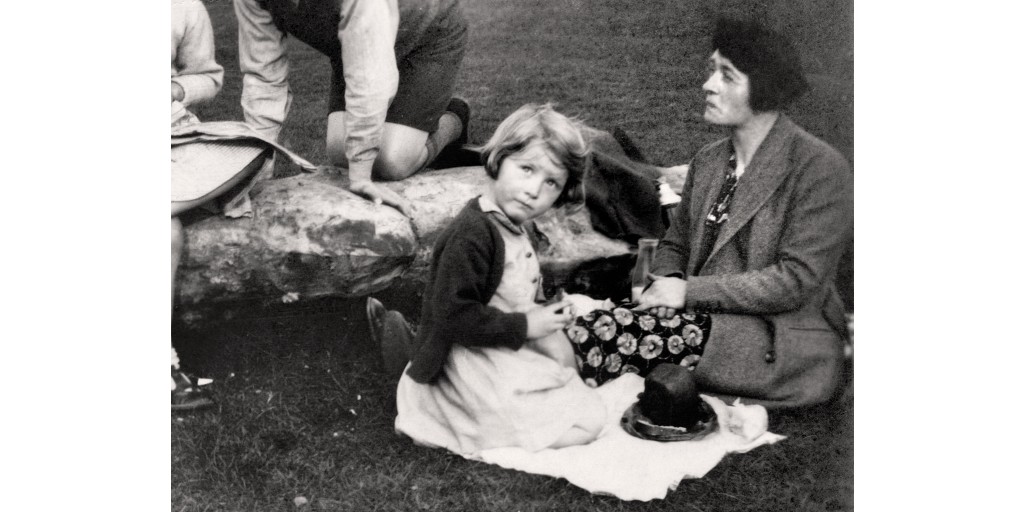
“Until I saw the restored version of the other photograph”, Frances says, “I hadn’t realised that my whole family is in that picture: Dad, my two brothers, my two sisters - but also my mum! She was holding the camera; but I can now see her shadow filling the foreground of the image!”
In fact, Frances has just one photograph of her with her mother. Seated together on a rug, they inhabit the corner of a tiny print just 8 cm wide, themselves barely the width of a thumb. The only pictures Frances has of her parents and siblings when they were children are a handful of small, fading family snaps.
“We didn’t have time for photographs”, Frances says. “Before the war, my parents ran the local store together. But at the outbreak, Dad was told he had to work nights at the factory [Heenan Froude, which was manufacturing precision aircraft parts]. So, Mum had the shop to run, and all of us to look after. I was on a bus recently and watched a lady get on with 3 little children, and I thought back to my mother and what it must have been like for her with five of us under 8.”
As a Christmas gift, Frances decided to give her siblings framed copies of the family pictures in her possession. She had seen an advertisement for Restoring Glory photograph restoration, and hoped that the photographs could be improved a little, and enlarged to fit 18 by 13 cm frames.
The pictures were indeed restored and enlarged, and her brother and sisters were delighted with their presents.
Frances herself, though, was speechless when she saw the restored photograph of her mother, the only picture she has of them together. What had for over 70 years been a dark corner of a small, fading photograph is now a glorious 18 by 13 cm in size and beautifully clear.
If you have a treasured old photograph, contact Restoring Glory today to start out on your own amazing journey.
Thursday 25th July 2019The story (and science) behind your pictureby William Jupe
Black and white
If your old photograph is black and white, or sepia, it is very likely to be a Gelatin Silver print.
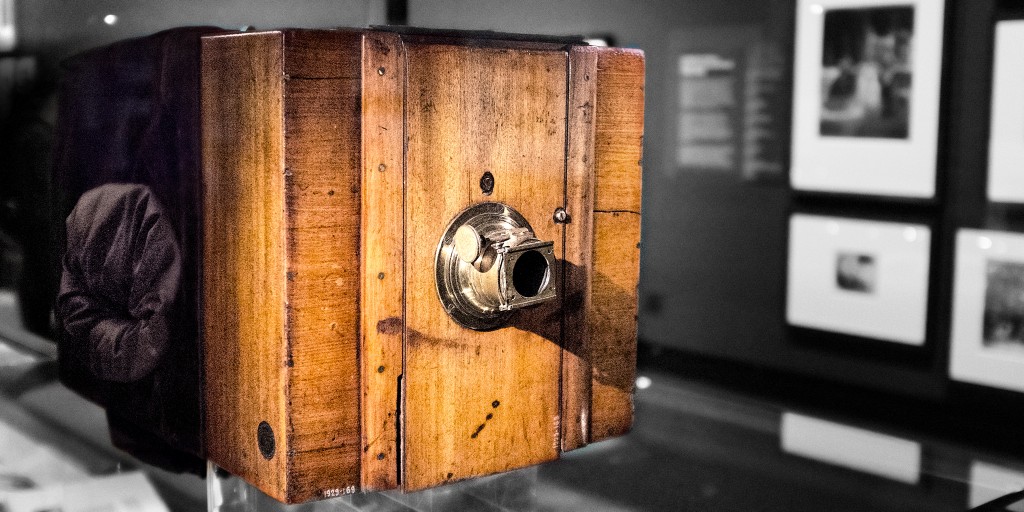
In the Gelatin silver halide process, camera 'film' consists of a light-sensitive emulsion (a gelatin made of lots of light-sensitive silver halide crystals) on a base of plastic. When a photograph is taken, the crystals react to the light coming through the camera shutter, so that in the areas of the scene where there is light a reaction takes place, while in dark areas the crystals are unchanged. When the film is subsequently processed, the light-affected crystals react again to the developer solution to form black grains of silver. These black grains remain on the film, while another chemical (fixer) is applied to wash away the crystals that weren't exposed to light (the dark areas of the scene). The result is a 'negative' - a reverse image of the scene that was photographed, with the lightest areas of the photographed scene represented by the greatest density of black grains. To create the positive image that is needed, light is shone through the negative onto a special paper which (like film) is coated with light-sensitive silver compounds. This is your photographic print.
Gelatin silver halide was the basis of the methods later used for making colour photographs. But instead of one layer, several layers of emulsion were employed, with each emulsion recording a different colour.
Sepia
From the 1880s onwards photographers sometimes chose to give their black and white prints a 'tone' - for two main reasons: to make the picture look warmer, and/or to act as a preservative to prevent it from fading. Sepia toner converts the metallic silver in the print into silver sulfide, which is 50% more stable than silver and makes the print more resistant to pollutants in the atmosphere. In the process it gives the image a comfortable, yellow-brown hue.
Other tones were also used, sometimes to preserve, sometimes to add warmth, and sometimes to cancel out an unwanted colour tone produced by the printing process and provide a deep, rich black - the main purpose of selenium, which converts metallic silver to silver selenide. It was thought that selenium could also double the life of a print, but this is now questioned.
When your toned photograph is restored you can choose to retain the yellow-brown hue or have a picture that is black and white. Some prefer to keep the tone because they feel it is 'authentic'. Others argue that black and white is authentic, and that the tone might have been applied reluctantly by the photographer to keep the picture from fading. To complicate matters, many prints have yellowed over time because the photographic paper or gelatin matrix have changed colour with age (the silver particles making up the image are oxidising and causing the print to yellow and fade). So 'authenticity' means different things to each of us, and the decision to give your restored picture a 'hue' (or not) becomes a matter of taste and personal preference.
Colour
Whilst colour film didn't become available until the 1930s, pioneers had been experimenting with techniques for creating colour photographs for a long time before that. The first demonstration of the three-colour process that would become the foundation of almost all future colour techniques was in 1861. Using James Clerk Maxwell's method, three separate black and white photographs were taken and then projected through red, green and blue colour filters. Lumière Autochrome, the first commercially successful colour process, reached the market in 1907, but the required glass plates were expensive and exposure times long, making snapshots impossible. It wasn't until Kodak released Kodachrome film in the 1930s that colour photography (though still more expensive and less flexible than black and white) became more widely available and practical.
A correctly processed and stored black and white photograph (created using the silver halide method) is remarkably stable, shown by the huge number of old prints and negatives that survive. But colour photographs are, sadly, intrinsically unstable and much more vulnerable to light and fading. A colour picture's resilience depends on many factors, including the kind of inks and photographic paper that were used to make it, the type of light to which it has been exposed (ultraviolet radiation from sunlight is a particular problem), the intensity of the light and length of exposure to it, and the humidity and temperature of the display or storage environment. Older dye-based inks are invariably less resistant to sunlight and chemicals than 'pigment' inks, with the various dyes in a picture fading at different rates depending on how they were made. It is not uncommon for a photograph to have faded to its last surviving colour (red, blue, green or yellow); and eventually that final colour, with its remaining detail, will disappear, too.
The process of decay can be slowed by keeping colour photographs framed behind glass; this protects them from gasses in the air that cause fading (ozone, nitrogen oxide and sulphur oxide) - and away from bright light; an album with acid free pages is best for prolonging a picture's life. But while sunlight is a major problem for colour photographs, some will unfortunately fade even in the dark.
Digital photography - and photograph restoration done with computers - is hugely beneficial in this respect. Once a photograph has been restored and captured as a digital file, fading and decay cease to be problems because a fresh print can always be made.
If you have a treasured old photograph, contact Restoring Glory today to start out on your own amazing journey.
Thursday 25th July 2019
More StoriesAbout your photographs
 Ann's Story“My father looks 50 in this photograph”, Ann says. But in 1918, when she believes the picture was taken, he was only 23....
 Christine’s StoryNo two picture restoration projects are the same but Christine’s was unique in its own way.. Some years before, she ...
 David's Story‘H Mason & Sons. Coal Merchants. Diglis, Worcester’, proclaims the sign on the horse-drawn cart. But H is ...
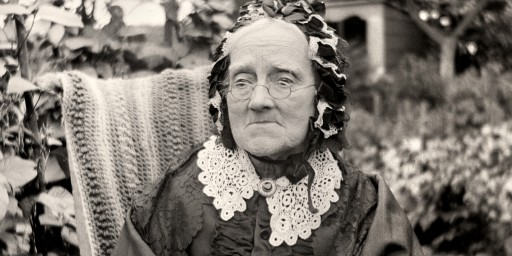 Elizabeth's Story“I felt sure that a member of his family would call one day”, said the owner of the house when Elizabeth knocked at the door....
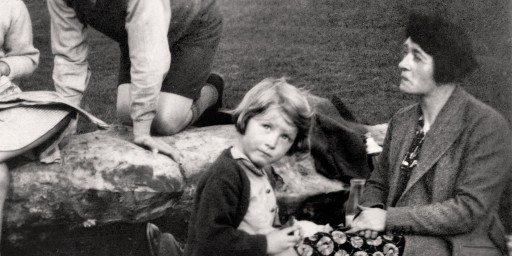 Frances's Story“Until I saw the restored version of the other photograph”, Frances says, “I hadn’t realised that ...
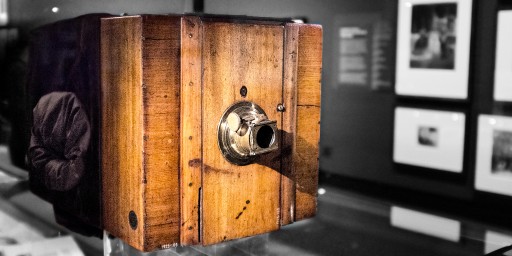 The story (and science) behind your pictureBlack and white. If your old photograph is black and white, or sepia, it is very likely to be a Gelatin Silver print.. ...